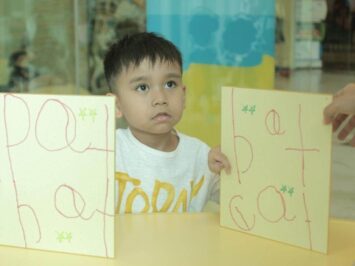
Phonics lessons are an essential part of the reading process for young learners. Phonics is a method of teaching children to read by correlating sounds with letters or groups of letters in an alphabetic writing system. In simple terms, phonics is the process of teaching children how to read and write by helping them to understand the relationship between sounds and letters. In this article, we will explore the importance of phonics lessons and how they can help your child build a strong foundation in reading.
Why are Phonics Lessons Important?
Phonics lessons are the building blocks of reading. They help children learn to read by breaking down words into their component sounds and then blending those sounds together to form words. When children learn to read using phonics, they are better equipped to decode unfamiliar words and understand what they are reading.
Here are some of the key reasons why phonics lessons are so important:
- Phonics lessons teach children the relationship between sounds and letters.
- Phonics lessons help children to read more accurately and fluently.
- Phonics lessons provide a strong foundation for spelling and writing.
- Phonics lessons help children to develop critical thinking skills.
- Phonics lessons enable children to read independently and with confidence.
How Do Phonics Lessons Work?
Phonics lessons typically start with teaching children the individual sounds of letters or groups of letters, known as phonemes. Once children have learned these sounds, they can begin to blend them together to form words. For example, children may learn that the letter "s" makes the sound "s" and the letter "h" makes the sound "h." They can then blend those two sounds together to form the word "sh." As children progress, they learn more complex sounds and combinations of letters.
Phonics lessons often involve games, activities, and worksheets to help reinforce learning. For example, children may be asked to match pictures with words that start with a certain sound, or they may be asked to spell words using the sounds they have learned.
What are the Different Types of Phonics Lessons?
There are several different types of phonics lessons, including:
- Synthetic Phonics - This approach teaches children to sound out words by blending individual sounds together.
- Analytical Phonics - This approach teaches children to recognize whole words or parts of words and then identify the sounds associated with those words.
- Linguistic Phonics - This approach teaches children to use phonics alongside knowledge of the English language and its rules.
- Embedded Phonics - This approach teaches phonics as part of a wider reading curriculum.
What are Some Common Phonics Rules?
Phonics rules are the patterns and sounds that children learn to help them read and write. Here are some common phonics rules that children may learn:
- The letter "a" can make different sounds, such as the short "a" sound in "cat" and the long "a" sound in "cake."
- When two vowels are together, the first vowel is usually long and the second vowel is silent, such as in the word "boat."
- When a word ends in a consonant followed by "y," the "y" usually makes the long "i" sound, such as in the word "sky."
FAQs:
Q. At what age should children start phonics lessons?
A. Children typically start phonics lessons in kindergarten or first grade, around the age of 5 or 6.
Q. Can older children benefit from phonics lessons?
A. Yes, older children who struggle with reading can benefit from phonics lessons. Phonics is a foundational skill that can help children at any age to improve their reading and decoding abilities.
Q. Can phonics lessons be taught at home?
A. Yes, parents can teach phonics lessons at home. There are many resources available online, such as worksheets, games, and activities, that parents can use to teach their children phonics.
Q. Are phonics lessons the only way to teach reading?
A. No, phonics lessons are not the only way to teach reading. However, they are an effective and evidence-based method for teaching children to read and write.
Conclusion:
Phonics lessons are an essential part of the reading process for young learners. By teaching children the relationship between sounds and letters, phonics helps children learn to read and write with greater accuracy and fluency. Phonics lessons provide a strong foundation for spelling and writing, and they also help children develop critical thinking skills. By incorporating phonics lessons into their reading curriculum, parents and teachers can help children become proficient readers who are able to read independently and with confidence.