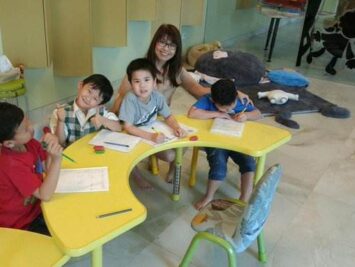
Phonics and blending are essential skills in learning to read. They provide the foundation for understanding the relationship between letters and sounds, enabling children to decode words and make sense of written language. As an expert article writer, I will delve into the intricacies of phonics and blending, exploring their importance in reading development and providing valuable tips and advice for parents and educators.
What are Phonics and Blending?
Phonics is a method of teaching reading that focuses on the connection between letters and sounds. It involves breaking down words into individual sounds (phonemes) and recognizing how these sounds are represented by letters or groups of letters (graphemes). Through phonics instruction, children learn the rules and patterns of letter-sound correspondences, allowing them to decode unfamiliar words and become confident readers.
Blending, on the other hand, is the process of combining individual sounds to form words. Once children have mastered the basic phoneme-grapheme relationships, they can blend sounds together to read whole words. This skill is crucial as it enables children to recognize words quickly and effortlessly, rather than struggling to sound out each individual letter.
Now that we have a better understanding of what phonics and blending are, let's explore why they are so vital in learning to read.
The Importance of Phonics and Blending in Reading Development
Building Strong Foundations
Phonics and blending lay the groundwork for reading development. Without a solid foundation in these skills, children may struggle to understand the relationship between letters and sounds, making it challenging to read new words. By teaching children to break words down into their component sounds and then blend them back together, phonics and blending provide an essential framework for learning to read.
Enhancing Vocabulary
By learning phonics and blending, children not only acquire the necessary skills to read new words, but also to understand their meanings. As they become familiar with phoneme-grapheme relationships, children are better able to recognize and decode unfamiliar words, expanding their vocabulary and comprehension.
Improving Spelling Skills
Phonics and blending also play a crucial role in spelling development. By understanding how letters represent sounds, children can apply this knowledge to spell new words correctly. They can use their phonetic knowledge to sound out words and then blend the sounds back together, helping them to spell more challenging words accurately.
How to Teach Phonics and Blending Effectively?
Now that we understand the importance of phonics and blending in reading development, the next question is how to teach these skills effectively. Here are some useful tips for parents and educators:
Introduce Letter Sounds First
When teaching phonics, it's essential to start by introducing the individual letter sounds rather than letters' names. Children need to understand the sounds each letter makes before learning how to blend them together. Once they have mastered individual letter sounds, they can move on to learning the corresponding graphemes.
Use Hands-On Activities
Children learn best through hands-on activities and games, so make learning phonics and blending fun! Use flashcards, magnetic letters, or other manipulatives to help children practice recognizing and blending letter sounds. You can also incorporate songs and rhymes to make learning more engaging and memorable.
Practice Regularly
Consistency is key when it comes to teaching phonics and blending. Make sure to provide plenty of opportunities for children to practice their skills, whether through structured lessons, games, or independent reading. The more they practice, the more confident they will become in their ability to decode words and read fluently.
Examples of Phonics and Blending in Action
Here are some examples of how children might apply phonics and blending skills while reading:
- Sounding Out Words: When encountering a new word, such as "cat," a child would break the word into its individual sounds (/k/, /a/, /t/) and blend them back together to read the word.
- Recognizing Patterns: As children learn more phoneme-grapheme relationships, they can recognize patterns in words. For example, knowing that "ch" makes the sound /ch/ and "oo" can make the sound /oo/, they can read the word "school" by blending the sounds /s/-/ch/-/oo/-/l/.
- Applying Phonics Rules: Understanding phonics rules can also help children read more complex words. For instance, if a child knows that when two vowels go walking, the first one does the talking (e.g., "ai" says /ā/ in "rain"), they can use this rule to decode longer words like "train" or "wait."
Comparing Different Phonics Approaches
There are several different phonics approaches used in schools, each with its own strengths and weaknesses. Here's a brief comparison of two popular methods:
Synthetic Phonics
Synthetic phonics is a systematic approach to teaching phonics that focuses on the explicit teaching of letter-sound correspondences. It involves breaking words down into their individual sounds and then blending them together to form whole words. This method is highly structured and sequential, making it easy for teachers to follow and for children to learn.
Analytic Phonics
Analytic phonics, also known as implicit phonics, takes a more holistic approach to teaching phonics. Instead of explicitly teaching letter-sound relationships, children learn to identify patterns and make connections between words. This method is less structured than synthetic phonics and relies heavily on children's ability to understand and use context clues.
While both approaches have their merits, studies have shown that synthetic phonics tends to be more effective in teaching reading skills, particularly for struggling readers.
Frequently Asked Questions about Phonics and Blending
Q: When should children start learning phonics?
A: Children can begin learning phonics as early as preschool. However, it's essential to consider each child's readiness and introduce phonics when they are developmentally ready.
Q: Are there any other reading methods besides phonics?
A: While phonics is the most common method used to teach reading, other approaches, such as whole language and balanced literacy, exist. These methods incorporate elements of phonics but also focus on other aspects of reading, such as comprehension and fluency.
Q: What if my child has difficulty learning phonics?
A: Some children may struggle with phonics, particularly if they have a learning disability or developmental delay. In this case, it's important to work closely with your child's teacher and seek additional support or interventions if necessary.
Q: Can I teach my child phonics at home?
A: Absolutely! Many resources are available to help parents teach phonics at home. However, keep in mind that teachers have specialized training in teaching reading, so don't hesitate to reach out for help if needed.
Q: Do all languages use phonics?
A: No, not all languages use the same phonetic system as English. Some languages, such as Japanese and Spanish, have consistent, predictable sound-symbol relationships, making them easier to learn than English.
Conclusion
Phonics and blending are critical skills in learning to read. By providing children with a solid foundation in letter-sound correspondences and blending, we enable them to decode words and become independent readers. As parents and educators, it's essential to understand the importance of these skills and provide ongoing support and instruction to help children develop their reading abilities. With the right tools and strategies, we can ensure that every child becomes a confident and successful reader.